“They know how to do it, but every morning is still a battle.”
Dressing, shoes, school bags and getting out the door can involve far more developmental demands than we realise.
Loading…
Sometimes you have already read the advice, tried the strategies and spoken with professionals, but the same moments at home keep becoming difficult.
Getting dressed. Leaving the house. Sitting to learn. Coping after school. Packing a bag. Joining family life. Knowing when to help and when to step back.
A 1:1 online session gives us space to look at your child, your family and the everyday moments where things keep getting stuck.
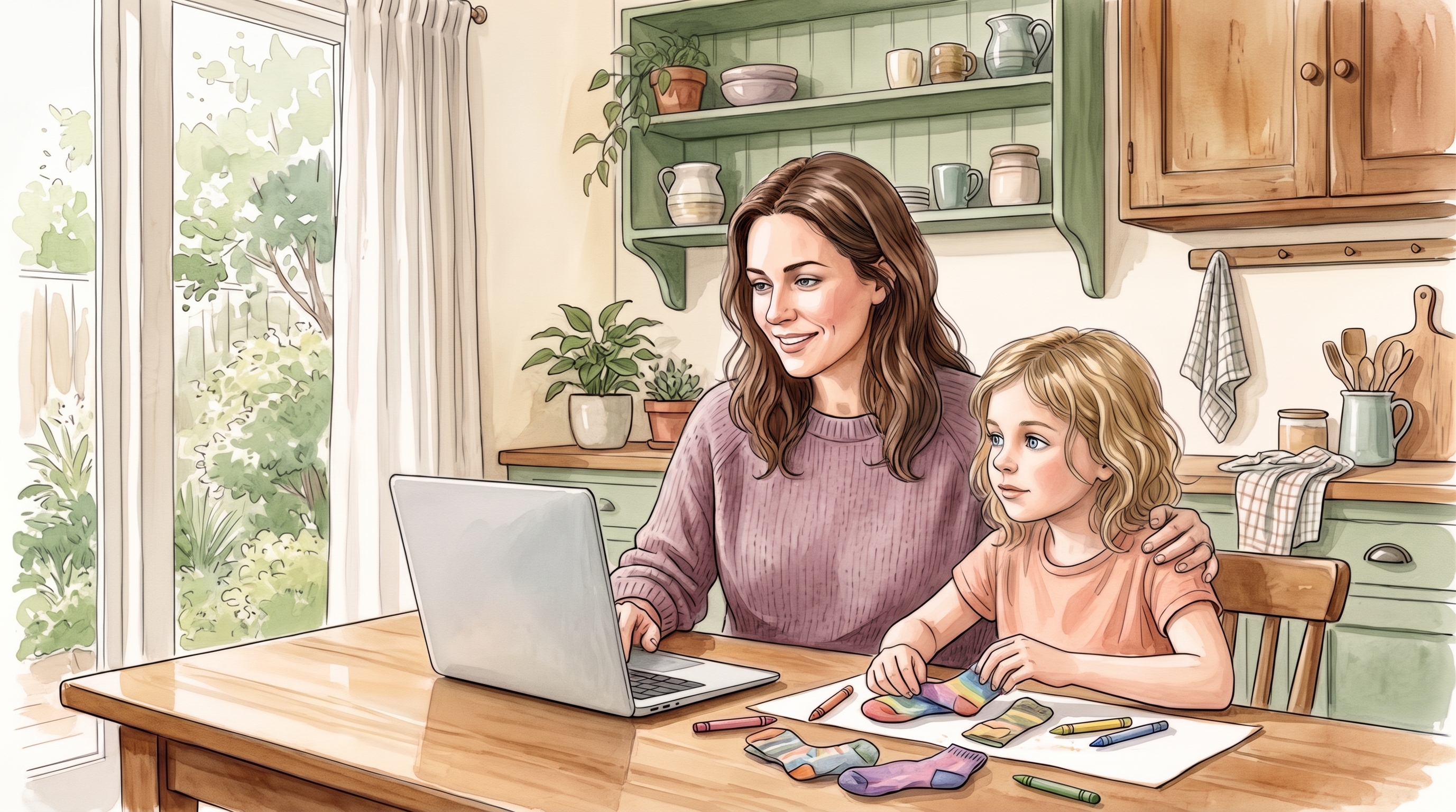
Dressing, shoes, school bags and getting out the door can involve far more developmental demands than we realise.
You want to understand what is happening around fatigue, sensory load, movement, regulation and the demands of the day.
You want to build independence without turning ordinary routines into constant frustration.
Reports, therapy goals and professional language can be hard to translate into ordinary Tuesday afternoons.
You are trying to find the difference between supporting them, reducing overwhelm and still allowing manageable challenge.
Sometimes another generic list of activities is not what your family needs.
What happens before the struggle? When is it easier? When does it fall apart? What seems to help or make things harder?
Movement, motor planning, coordination, body awareness, regulation, attention and independence can overlap in everyday tasks.
Instead of expecting the whole routine to suddenly work, we find the part that is realistic to practise next.
Dressing, washing, play, school bags, family jobs and ordinary routines can become meaningful practice opportunities.
Sometimes clarity comes from knowing what does not need to be another priority right now.
Your child may already have excellent professionals involved. Their role can be to assess, guide and progress support. My goal is to help you understand how developmental opportunities can also sit inside everyday family life.
Two to five minutes of meaningful practice does not replace professional support.
But when a child gets repeated opportunities to use a skill across ordinary days, that skill has more chances to become familiar and useful in real situations.
Sometimes the most useful plan is not adding another activity. It is seeing an existing routine differently.
Something feels harder for your child than it seems to be for other children, but you cannot quite put your finger on why.
We can translate professional language into everyday examples and questions you can take back to your treating team.
You want practical ways to reduce some of the friction without simply doing everything for your child.
Not ten new things. One or two priorities that make sense for the family in front of us.
Tell me what keeps happening, what you have already tried and what you wish felt easier. I can then work out whether 1:1 support is the right next step.
Movement, visual skills, coordination and executive functioning can all be part of the foundations children use during learning.
Tell me what you are noticingWhere appropriate, small group opportunities can support movement, participation, social connection and confidence.
Register interest