Sometimes the behaviour we notice first is only one part of the story.
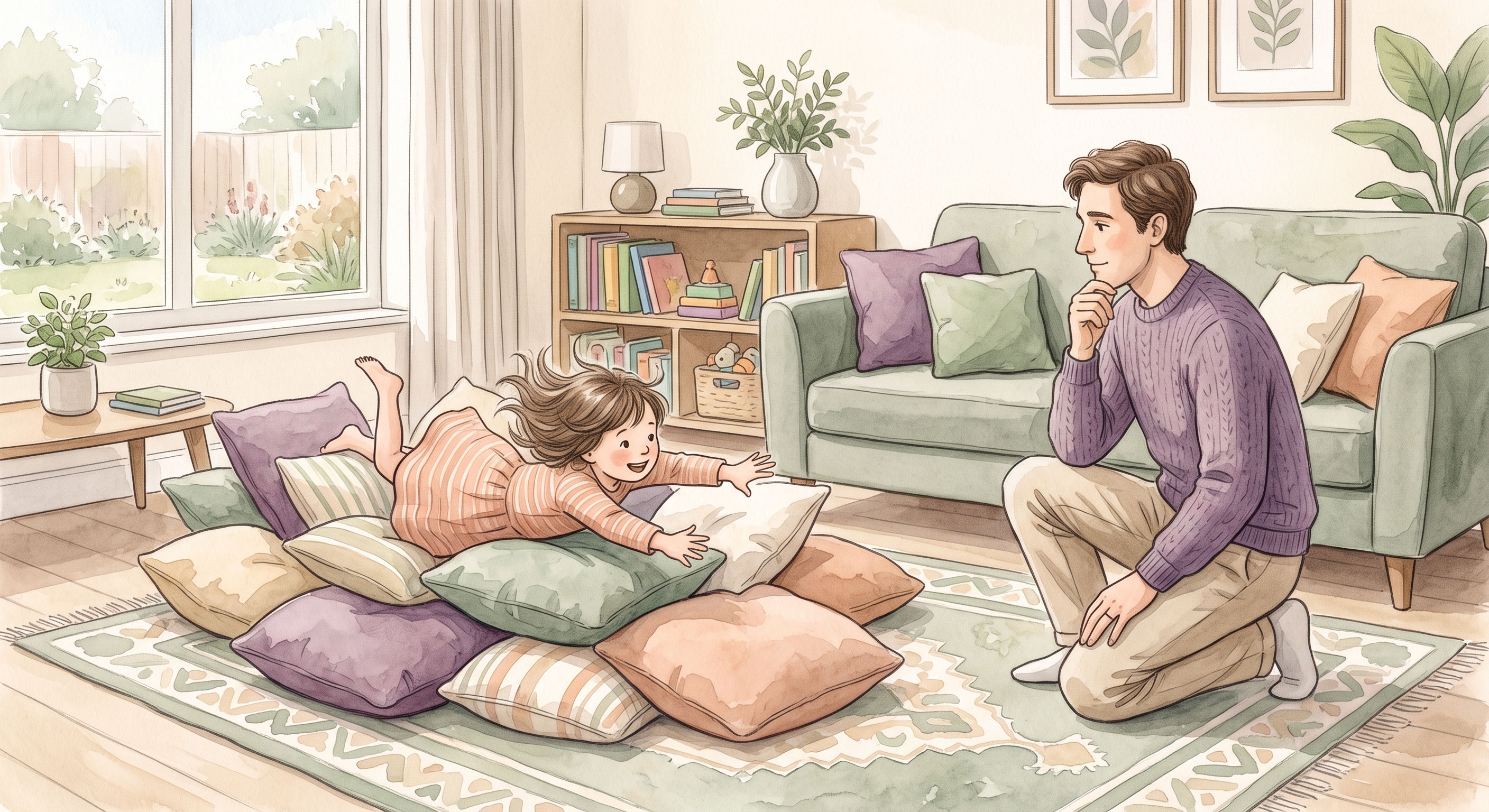
Crashing, wriggling, avoiding, chewing, rough play or falling apart after school can all give us clues about what your child might be finding difficult, seeking or working hard to manage.
You do not need to know the developmental terminology. Start with what you see, and we can get curious from there.
What seems to change when this happens?
Do they become more settled? More alert? More overwhelmed? Does it happen at a particular time, place or during a particular demand?
What is happening right now?
Tap the one that feels closest. You can change it whenever you like.
They keep crashing, bumping or throwing their body around
You may be seeing a child actively looking for strong movement and body feedback. Crashing, pushing, squeezing and rough movement can give the brain very noticeable information from muscles and joints.
You don't have to work everything out right now.
Take a few seconds if your own brain needs a break too.
You do not need to fix anything for the next few seconds. If breathing cues feel helpful, follow the circle as it grows and softens again.
Breathing is optional. You can also simply watch the circle move.
You see your child across the ordinary moments that nobody else gets to see.
Before school. After school. During dressing. When everyone is tired. At the shops. Around siblings. During the five minutes when everything suddenly becomes harder.
Those observations are useful.